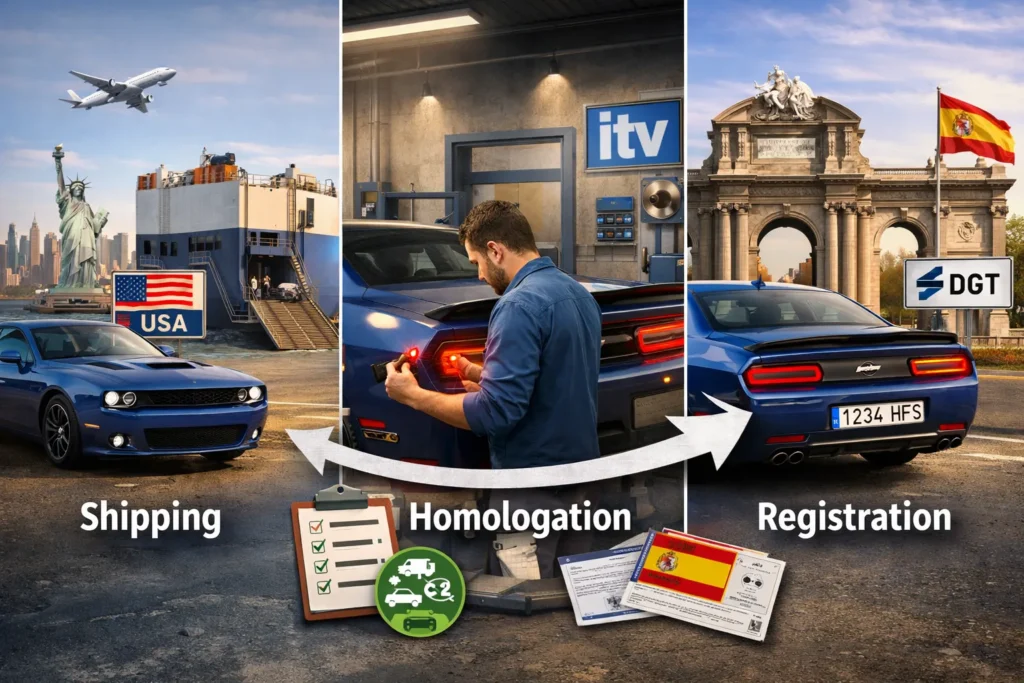
Importing a U.S.-registered vehicle into Spain can be done — but not every car is eligible, and the fastest way to waste money is buying first and checking later. Spain’s process involves customs, technical compliance, homologation, ITV and DGT registration, and each stage can introduce requirements that aren’t obvious at the point of purchase.
This guide gives you a practical eligibility checklist to help you answer the key question up front:
“Can this car realistically get Spanish plates?”
The quick answer
- Many U.S. cars can be registered in Spain with the correct modifications, paperwork, and homologation.
- Some cars cannot be registered under standard rules due to emissions/technical constraints or non-compliant modifications.
- Some cars become eligible only under special routes (e.g., importing as household goods when relocating, or historic registration for older vehicles).
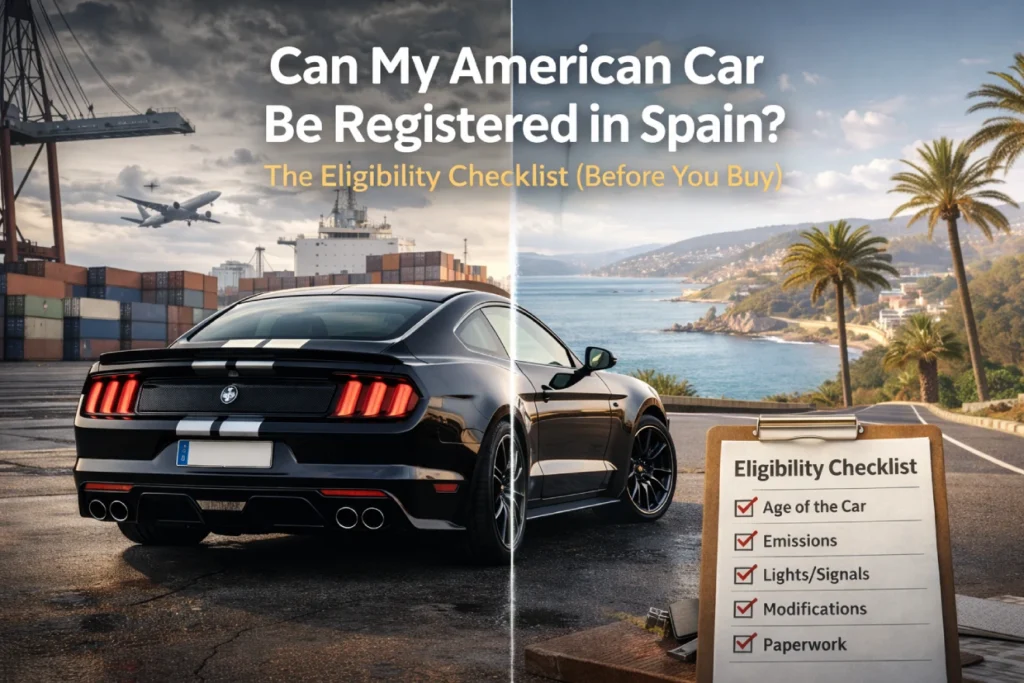
Eligibility checklist
1) What year is the car and when was it first registered?
This is one of the first filters we apply.
- Pre-2015 first registration can be problematic for some vehicles under standard procedures. In many cases, older technical standards may not be accepted without special routes.
- Over 30 years old may qualify for historic registration, which follows different requirements and can make otherwise difficult vehicles possible.
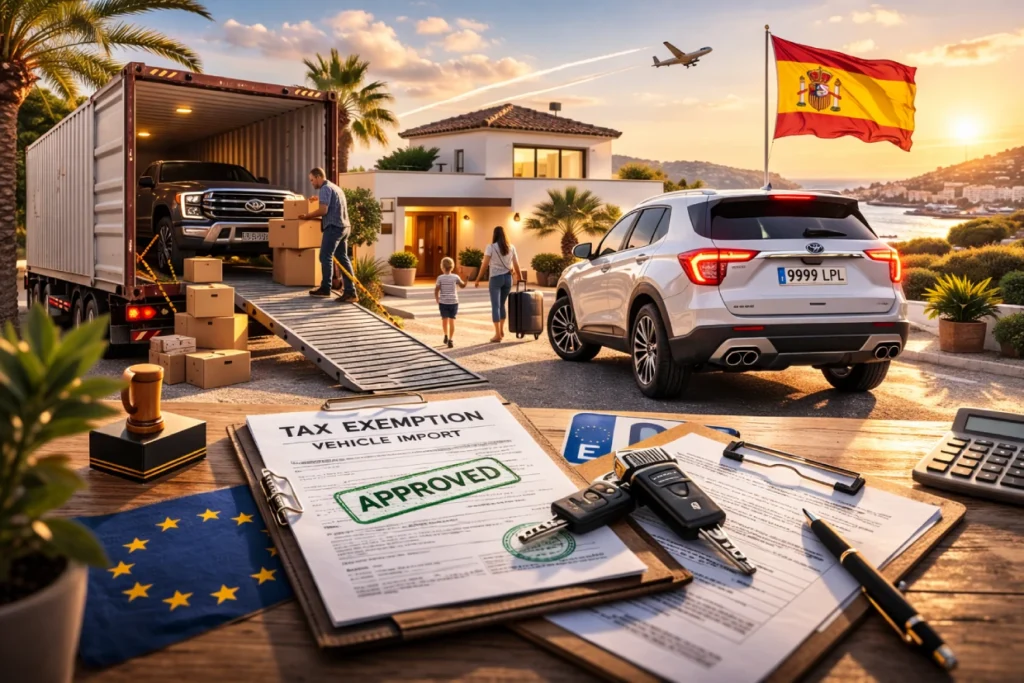
- Relocation to Spain: if you’re moving to Spain and meet the conditions, you may be able to import as household goods (and in some cases qualify for registration tax exemption), which can also change what’s possible.
Tip: “Model year” and “first registration date” aren’t always the same — we check the date that matters for Spain’s process.
2) Can it meet Spanish/EU emissions testing?
Yes, emissions are tested as part of the Spanish process.
What makes this tricky:
- Some models/years are harder to pass or homologate than buyers expect.
- Engine swaps, deleted catalysts, loud exhaust setups, or tuning can create issues.
If you’re unsure, treat emissions as a pre-check item before purchase — not a surprise after shipping.
3) Are the lights and signals convertible to EU rules?
Most U.S.-spec cars are not road-legal in Spain immediately, but many can be brought into compliance.
Common requirements include:
- Rear indicators often need to be amber (U.S. cars frequently use red indicators)
- Indicator and brake functions must be separated
- A rear fog light usually needs to be installed
- Side markers often need removal/adjustment
- Window tint may need adjusting to EU limits
Modern LED light clusters can require specialist modification (it’s not always a simple bulb swap).
4) Is the car modified?
Modified vehicles can be eligible — but it depends how far it’s been taken.
Usually acceptable:
- Wheels
- Brake upgrades
- Mild suspension changes
- Subtle exterior enhancements
Often problematic:
- Extreme lowering
- Straight-pipe exhaust systems
- Aggressive body kits or structural changes
When in doubt, the smart move is to pre-clear the configuration with photos/videos before buying (we do this with the relevant authorities when needed).
5) Does the paperwork and title type support registration?
Title status matters — and it’s one of the easiest places for buyers to get burned.
Common U.S. title types include:
- Clean/Clear
- Salvage
- Rebuilt
- Flood
- Fire damage
- Theft recovery
- Junk / non-repairable
A “cheap deal” often has a title story behind it. As dealers we check history databases and verify the vehicle’s background before purchase.
6) Are there known “edge cases” where Spain may say no?
Yes. Some vehicles can be blocked due to design or compliance constraints — a notable example often discussed is the Tesla Cybertruck, which may not be registrable under current Spanish/EU constraints.
Even if a car is legal in the U.S., that doesn’t automatically translate to Spanish approval.
What we need to confirm eligibility
To give you a clear answer early, we typically ask for:
- Make / model / year / VIN
- Photos of all four sides (condition + configuration)
- A short rear-light video showing indicators/brakes/reverse/fog (if present)
- Any paperwork you already have (title/registration/invoice)
This lets us spot common blockers immediately (tint, lighting layout, major modifications, missing docs, etc.).
GET IN TOUCH
Free Eligibility Check
If you’re considering a car in the U.S. (or you already own one), send us the details and we’ll tell you whether it can be registered in Spain, and what it will require.
👉 Send us your car details for a free eligibility check.