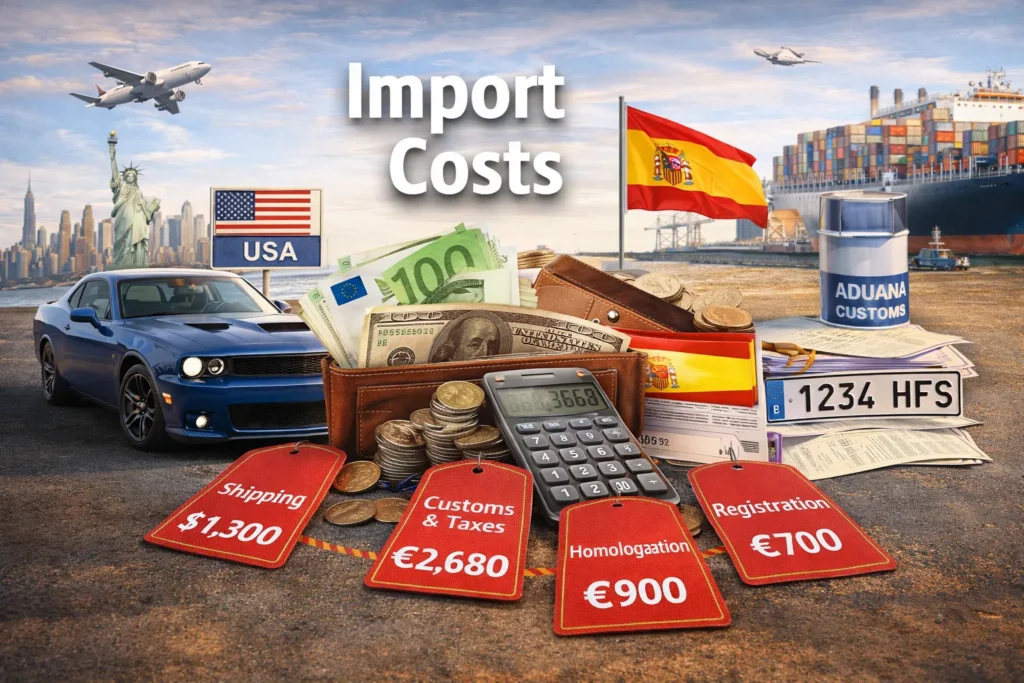
When importing a car from the USA to Spain, one of the most important early decisions is how the vehicle will actually be shipped.
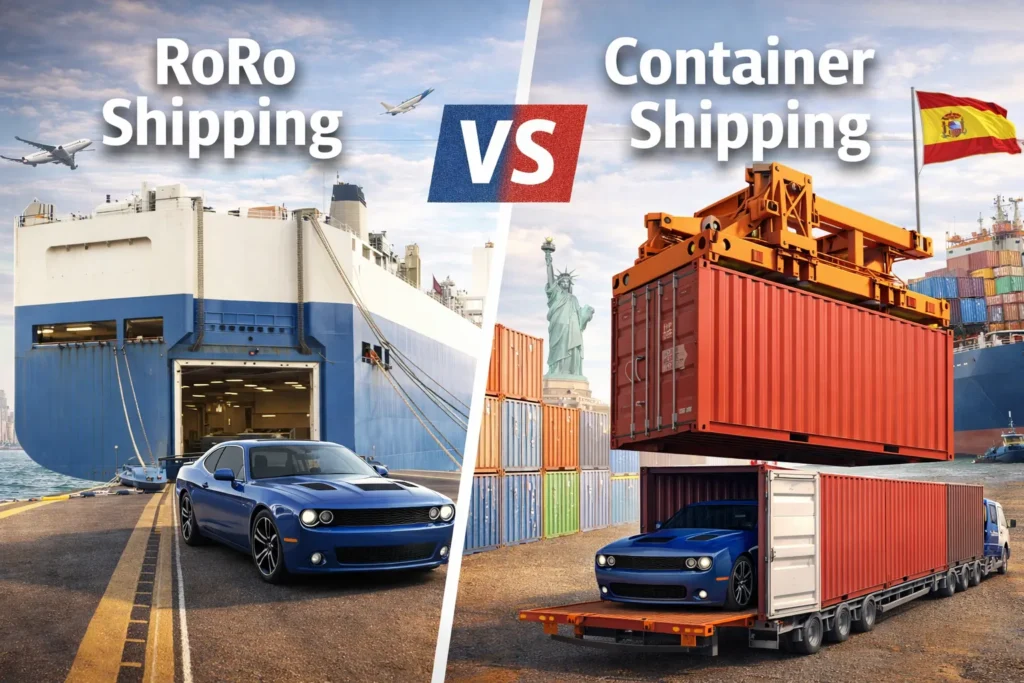
For most buyers, the choice comes down to RoRo shipping or container shipping. Both can work well, but they are designed for different priorities. RoRo is usually the more straightforward and cost-focused option, while container shipping is often chosen when protection, flexibility, or special handling matters more.
If you choose the wrong method for your type of vehicle, you can easily spend more than necessary or create avoidable delays.
What is RoRo shipping?
RoRo stands for Roll-on/Roll-off.
With this method, the vehicle is driven onto the vessel at the port of departure and driven off again at the destination. It is designed specifically for wheeled cargo and is widely used for cars, vans, trucks, and machinery.
For many standard vehicle imports, RoRo is the simplest route because it avoids the extra container loading and unloading steps.
What is container shipping?
Container shipping means the vehicle is loaded into a shipping container before being transported by sea.
The car is either secured inside its own container or loaded alongside other cargo, depending on the shipping arrangement. This method usually involves more handling and planning, but it also gives more physical protection during the voyage.
Container shipping can also be useful when the route, the vehicle type, or the port setup makes RoRo less practical.
The main difference between RoRo and container shipping
The best way to understand the difference is this:
- RoRo is usually simpler and more budget-focused
- Container shipping is usually more protected and more flexible
Neither method is automatically “better” in every case. The right option depends on the value of the vehicle, its condition, how quickly you want it moved, and how much risk or complexity you are comfortable with.
When RoRo shipping is usually the better option
RoRo is often the right choice when the vehicle is:
- a standard, running car
- not excessively modified
- not being shipped with additional parts or goods
- being imported with cost-efficiency as a priority
For everyday imports, RoRo is often attractive because the process is more direct. The vehicle goes onto the ship as a vehicle and comes off the ship as a vehicle, without needing container packing.
If you are still working out the total landed budget, read How Much Does It Cost to Import a Car from the USA to Spain? as well, because shipping method can make a noticeable difference to the final cost.
Advantages of RoRo shipping
Usually lower shipping cost
RoRo is often the more affordable option for a standard car.
Simpler loading process
Because the vehicle is driven onto the ship, the process can be more straightforward than container packing.
Well suited to normal vehicle imports
For cars that are complete, running, and standard, RoRo is often the most practical solution.
Drawbacks of RoRo shipping
Less physical enclosure
The car is not sealed inside a container, so it does not have the same level of enclosure and isolation during transit.
More limitations on what can travel with the vehicle
RoRo is generally intended for the vehicle itself, not for shipping loose parts or household goods inside it.
Not always ideal for high-value or delicate vehicles
For premium, unusual, or highly sensitive imports, some owners prefer the additional protection of container shipping.
When container shipping is usually the better option
Container shipping is often the right choice when the vehicle is:
- high value
- classic or collectible
- non-running or difficult to handle normally
- being shipped with additional parts or related items
- better suited to a route where container schedules are more practical
It can also be the better option when the owner wants a more controlled loading environment.
Advantages of container shipping
More protection during transit
A container gives the vehicle more enclosure during the journey, which is one reason many owners of valuable cars prefer it.
Better for certain specialist vehicles
If the car is rare, fragile, heavily restored, or particularly valuable, container shipping can offer more peace of mind.
More flexibility in some logistics setups
Container shipping can sometimes work better where RoRo access is limited or where schedule flexibility matters.
Drawbacks of container shipping
Usually more expensive
In many cases, container shipping costs more than RoRo.
More handling and planning
The vehicle has to be loaded, secured, and unloaded as container cargo, which adds more steps.
Not always necessary for standard imports
For an ordinary modern vehicle, container shipping can sometimes add cost without adding enough practical benefit to justify it.
Which shipping method is faster?
There is no universal answer.
In some cases, RoRo feels faster because the process is simpler. In other cases, container options may line up better with the available sailing schedule.
The key point is that the shipping method is only one part of the timeline. Even after the vehicle arrives in Europe, you still have customs, technical compliance work, homologation, ITV, and DGT registration to deal with.
If timing is one of your main concerns, read How Long Does It Take to Import a Car from the USA to Spain? as well.
Which shipping method is safer?
For most standard cars, both methods can work safely when managed properly.
That said, container shipping is usually the option people choose when they want more physical protection and enclosure during the journey.
RoRo remains a very common and reliable method, especially for normal vehicle imports, but it is usually chosen more for practicality and cost-efficiency than for maximum enclosure.
Which option is best for classic cars?
For classic or collector vehicles, container shipping is often the preferred choice, especially when the vehicle has high value or delicate paint, trim, or restoration work.
That does not mean RoRo is impossible for classics, but container shipping is often the route owners feel most comfortable with.
Which option is best for everyday American cars?
For many everyday imports such as standard Mustangs, pickups, SUVs, and family vehicles, RoRo is often the most sensible option if the vehicle is running and the goal is to keep costs under control.
The best answer always depends on the specific car, the route, and the owner’s priorities.
If you are not even sure whether the vehicle is suitable for Spain, start with Can My American Car Be Registered in Spain? The Eligibility Checklist.
How to choose the right shipping method
A good rule of thumb is:
Choose RoRo if:
- the car is standard and running
- cost-efficiency matters most
- you want the simplest practical shipping route
Choose container shipping if:
- the vehicle is high value or collectible
- you want more physical protection
- the car is non-running or needs special handling
- the route or logistics setup makes container shipping the better fit
Frequently asked questions about RoRo vs container shipping
Is RoRo always cheaper than container shipping?
Often, yes, but not automatically in every single case. Final pricing depends on the route, port, vehicle size, and shipping setup.
Can I put personal items in the car with RoRo?
This is usually not the best idea. In most cases, vehicle shipping should be treated as vehicle shipping rather than personal-goods transport.
Is container shipping worth it for a normal vehicle?
Sometimes, but not always. For many ordinary imports, container shipping can add cost without enough extra benefit. For higher-value vehicles, it can be much easier to justify.
Need help choosing between RoRo and container shipping?
If you are planning to import a vehicle to Spain, send us the following details of the car and we can advise you on the most practical route.
- make, model, and year
- whether the car runs and drives
- photos of the vehicle
- where the vehicle is located
- whether cost or protection is your main priority
We can then tell you what are the best options for your individual case.