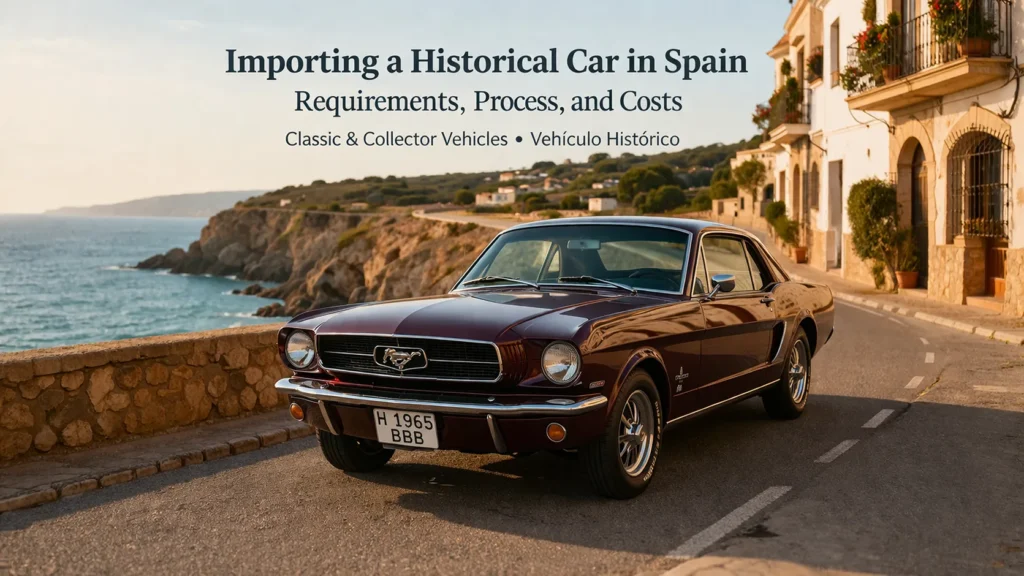
Importing a historical vehicle into Spain is a structured legal process that can offer clear advantages over standard vehicle imports. If your car qualifies for historical status, you may benefit from reduced technical requirements, less frequent inspections, and in some cases lower taxes.
This guide explains how historical vehicle imports work in Spain, what qualifies, and what to expect during the process.
What Qualifies as a Historical Vehicle?
In Spain, a vehicle can be classified as historical (vehículo histórico) if it meets specific criteria. In most cases, the key requirements are:
- The vehicle is at least 30 years old
- It remains largely original, with period-correct components
- It is no longer in production
- It has cultural, technical, or collector interest
Qualification is not automatic. The vehicle must go through an official evaluation process, including inspection and certification by authorised laboratories or regional authorities.
Importing a Historical Car from Outside the EU
If you are importing a historical vehicle from a non-EU country such as the United States, the process typically involves four main stages.
1. Customs Clearance
When the vehicle arrives in Spain, it must be declared at customs. Import VAT is usually payable, and customs duties may apply depending on the vehicle’s classification and value. In some cases, reduced rates may be available for collector vehicles.
2. Documentation Requirements
You will need to provide a complete set of documents, including:
- Proof of ownership and foreign registration
- Bill of sale or purchase invoice
- Transport and shipping documents
- Identification (NIE/DNI or passport)
- A technical file describing the vehicle’s specifications and originality
Missing or inconsistent documentation is one of the most common causes of delays.
3. Historical Certification Process
Before registration, the vehicle must be officially classified as historical. This involves:
- A technical inspection by an authorised laboratory
- An expert report confirming authenticity, age, and condition
- Approval from the relevant regional authority
This certification determines how the vehicle will be registered and what requirements apply.
4. Registration and Historic Plates
Once approved, the vehicle can be registered in Spain as a historical vehicle. It will receive historic number plates, typically starting with the letter “H”.
Technical Requirements and ITV for Historic Vehicles
One of the main advantages of historical classification is that the vehicle does not need to comply with modern EU regulations.
Instead, it is assessed based on the standards that applied when it was originally manufactured.
However, the vehicle must still:
- Be roadworthy and mechanically safe
- Retain essential safety features appropriate to its era
- Pass a historic vehicle ITV (technical inspection)
Inspection intervals are generally longer than for standard vehicles, especially for older cars.
Costs and Taxes to Expect
The total cost of importing a historical vehicle into Spain can vary depending on the vehicle’s value, origin, and condition. Typical costs include:
- Import VAT and possible customs duty
- Engineering and laboratory certification fees
- Registration and administrative costs
- Regional taxes (often reduced or exempt for historical vehicles)
- Transport and shipping
Because procedures can vary slightly between autonomous communities, cost estimates should be tailored to your specific case.
Common Challenges to Be Aware Of
Even though the process is well defined, there are several areas where problems can arise:
- Incomplete or incorrect documentation
- Vehicles that have been heavily modified and fail originality requirements
- Delays in laboratory certification or regional approval
- Misunderstanding tax treatment at import stage
Addressing these early can save significant time and cost.
Practical Next Steps
If you are considering importing a historical vehicle into Spain, the most effective approach is to plan the process before shipping the car.
Key steps include:
- Confirming whether the vehicle is eligible for historical classification
- Preparing complete and consistent documentation
- Understanding the likely tax exposure
- Planning certification and registration in advance
Conclusion
Importing a historical car into Spain is often more straightforward than importing a modern non-EU vehicle, provided the car meets the criteria for historical status.
The key factors are age, originality, documentation, and successful certification. When handled correctly, the process can offer both regulatory flexibility and long-term ownership benefits.
If you are planning to import a classic or collector vehicle into Spain, BOOKELAAR can help you assess eligibility, manage the process, and avoid costly mistakes. Get in touch for practical guidance before you ship your vehicle.