If you are relocating to Spain permanently, you may be able to import your vehicle as part of your household goods and obtain an exemption from Spanish registration tax (Impuesto de Matriculación). In that scenario, you generally still pay for items like ITV, administrative steps, plates, and any professional support you choose to use.
This guide explains who can qualify, the deadlines people miss, the mistakes that usually break eligibility, and the safest step-by-step route to follow.
What “tax-free import” actually means
“Tax-free” normally refers to an exemption from Spanish registration tax when importing a vehicle as part of a change of residence. Approval is granted on a case-by-case basis and depends on meeting the conditions and submitting everything on time.
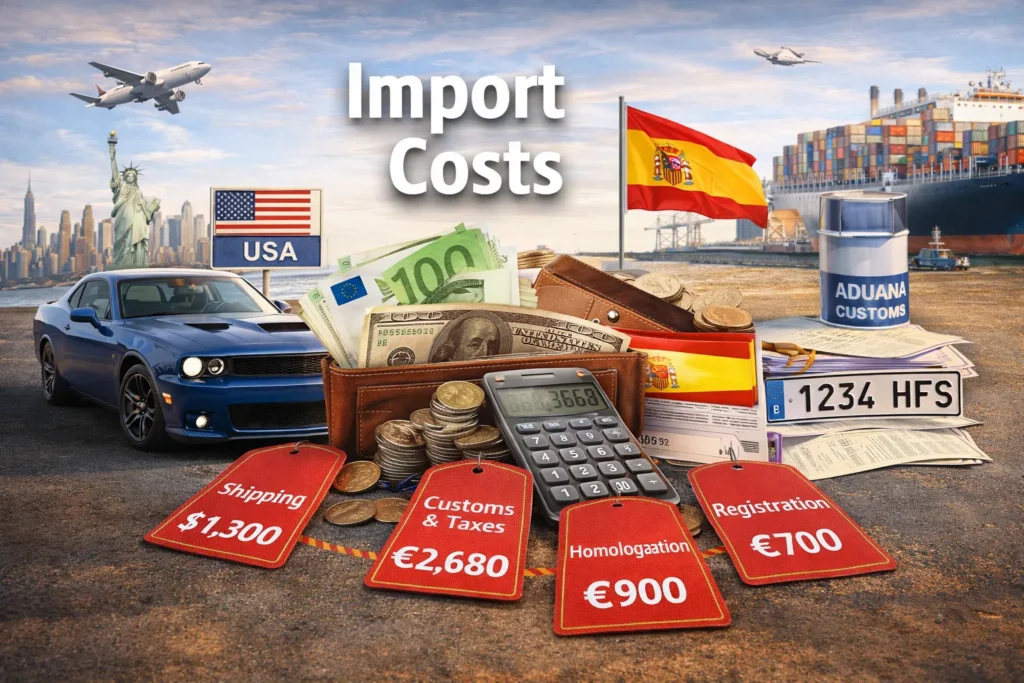
It does not mean “no costs at all”. Even if you qualify, you will still have costs such as ITV, administrative work, and number plates.
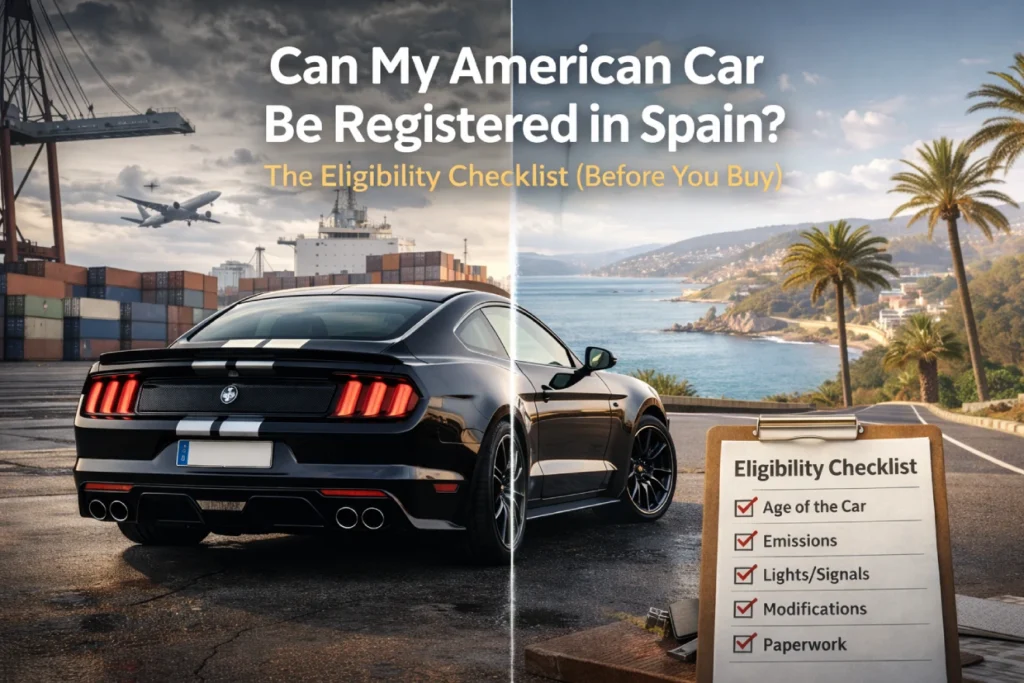
Who can qualify
The exemption is aimed at people who are genuinely relocating and bringing their own vehicle as part of their move. These are the key conditions you need to meet.
You must become an official resident in Spain
You’ll need to establish residency, which typically includes having a NIE and registering as a resident.
Your padrón registration must be recent and the deadline is strict
Applications usually need to be submitted within a limited timeframe after registering on the padrón, commonly around 60 days. Deadlines are strict, so preparation matters.
You must have owned the vehicle for at least six months before relocating
You need to prove ownership for at least six months prior to moving. Proof can include registration documents, insurance records, or your purchase agreement.
You must provide proof of ownership
This can be the original invoice or a private purchase contract.
You must prove you lived abroad before moving
Supporting evidence can include municipal registration, tax statements, employment contracts, or social-security documents. A self-employment registration can also work if it aligns logically with your relocation timeline.
You cannot sell the vehicle for a defined period after import
Tax exemptions commonly require you to keep the vehicle for personal use for at least 12 months after importation.
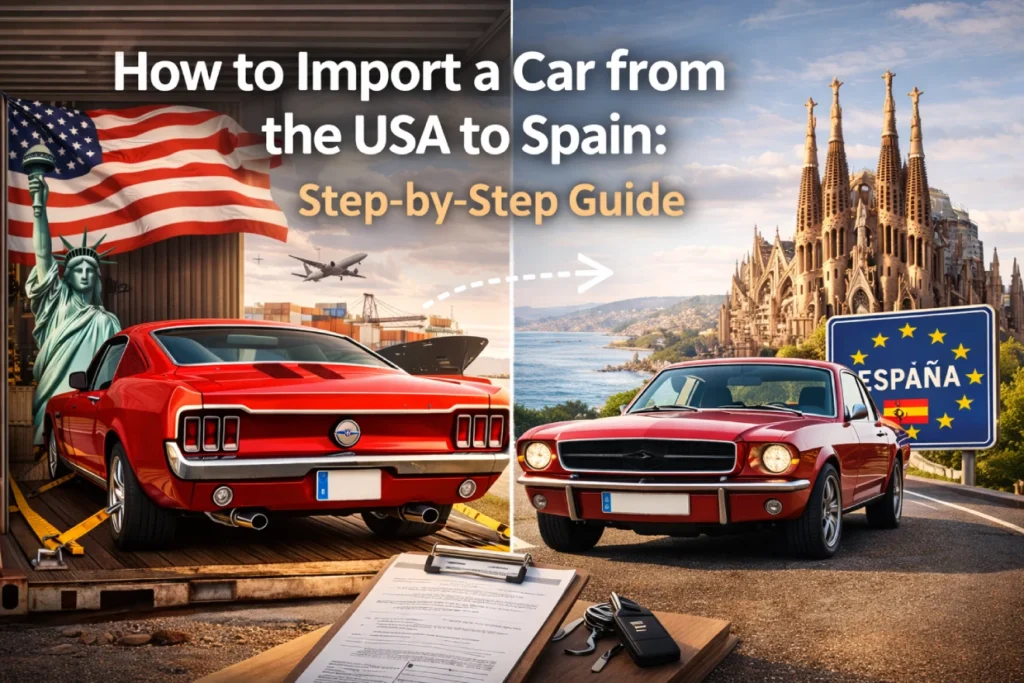
Step-by-step process to do it properly
This is the order that avoids most of the mistakes we see.
Step 1: Pre-check your eligibility before you ship
Do not ship the vehicle until you can prove:
- You qualify as a relocating resident
- You owned the vehicle for at least six months
- You can evidence your life abroad before the move
If you can’t prove these points cleanly, the “tax-free” route is at risk.
Step 2: Build your evidence pack
Prepare documentation for:
- Your residency setup in Spain (NIE, residency status)
- Your padrón registration and the date it was issued
- Ownership and usage evidence (insurance, registration, purchase docs)
- Proof of living abroad (tax, work, social security, municipal registration)
Step 3: Submit within the deadline window
Your application timing matters. The window is tight and commonly around 60 days from padrón registration. If you miss it, you may fall back into standard import taxes and fees.
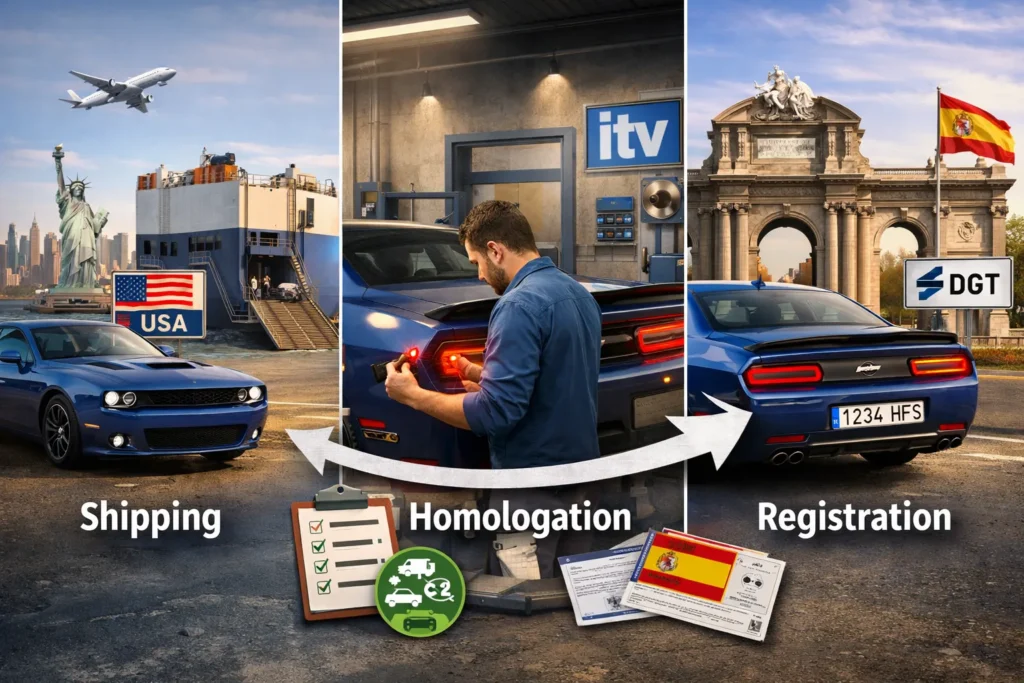
Step 4: Complete the Spain-side technical and registration steps
Even if tax exemption is approved, the car still has to be made road-legal and registered:
- Compliance modifications where required
- Homologation route (if needed for your vehicle)
- ITV inspection
- DGT registration and plates
Common mistakes that kill eligibility
Waiting until the car arrives to collect documents
Deadlines are strict. If you only start building your case once the vehicle is already on the way, you can lose the exemption on timing alone.
Not having clean proof of six-month ownership
If the dates don’t line up, you will likely fall back into standard import costs.
Missing the padrón timing window
This is one of the most common failures. Treat the “around 60 days” window as a hard deadline and work backwards.
Selling the vehicle too soon
If you sell the car within the required retention period (commonly 12 months), you can create problems and may trigger repayment.
What you still pay for, even when exempt
Even when approved, you should still plan for:
- ITV fees
- Administrative procedures
- Number plates
- Any professional assistance you choose to use
Relocating soon? Speak to us before you ship
GET IN TOUCH
Free Eligibility Check
If you’re moving to Spain and want the best chance of importing your car under the tax exemption route, the key is planning and timing. Send us your timeline and vehicle details early and we’ll tell you what to prepare and what to avoid.
👉 Send us your car details for a free eligibility check.